
News News Official
Final Fantasy Resonance turns 26 classic heroes into a surprisingly flexible party-building system
Final Fantasy Resonance launches on October 22 across consoles and PC, with Steam scheduled for October 23 in Square Enix's Japanese release calendar. Its most distinctive combat mechanic gives players 26 collectible Visions, allowing legacy characters to transform the roles, abilities and statistics of Rain, Lasswell and their companions.
 By Hugat Final Fantasy Resonance
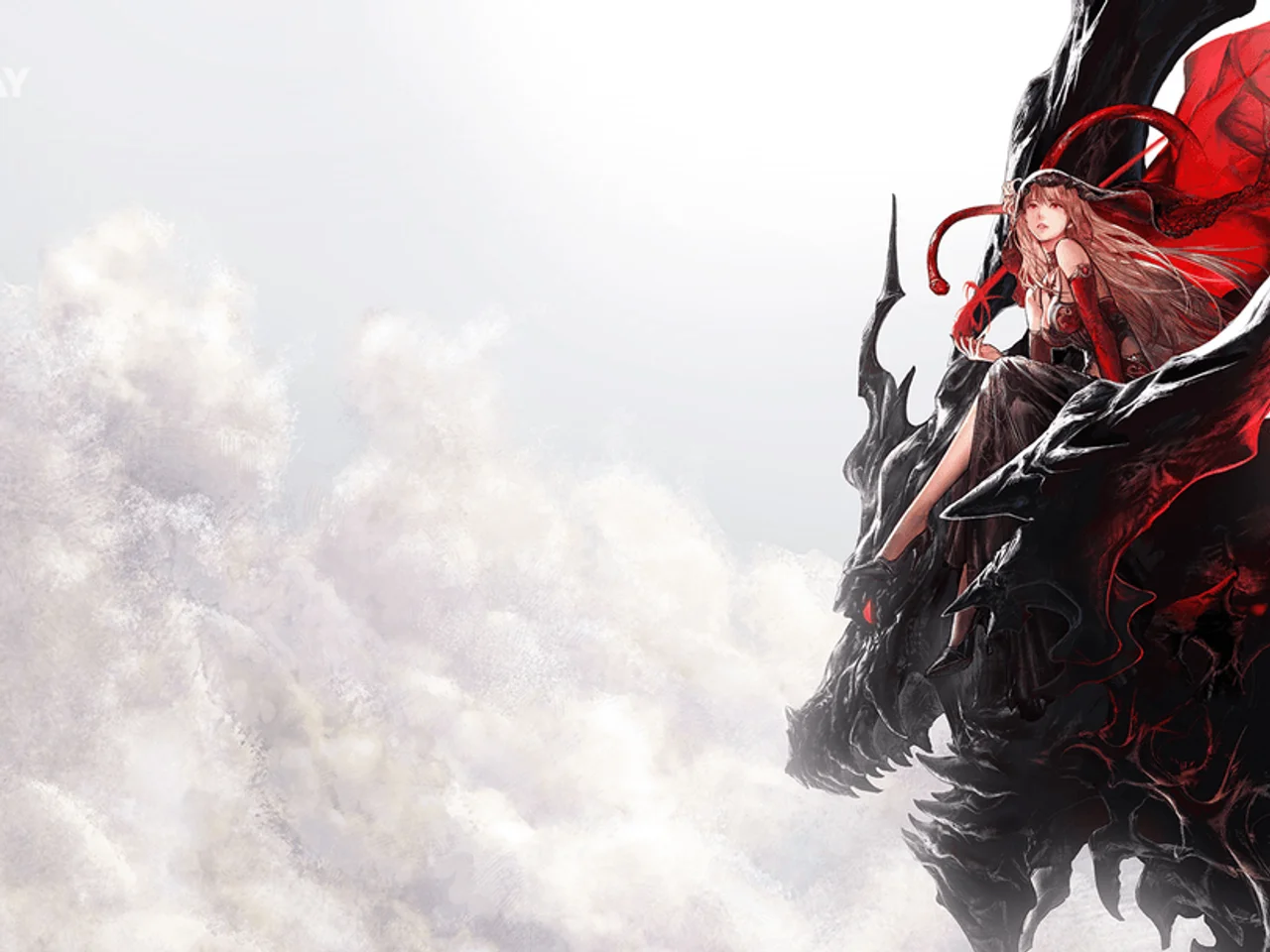
A character built to break enemy defenses does not necessarily have to remain a pure damage dealer. In Final Fantasy Resonance, Lasswell can equip a healing-oriented Vision and gain support abilities, or combine his natural strengths with Cloud to become a more effective offensive specialist.
That flexibility is the real attraction of the Visions system. Square Enix is drawing on the long history of Final Fantasy, but the returning heroes contribute more than recognizable animations and musical references.
Building roles beyond each character's starting job
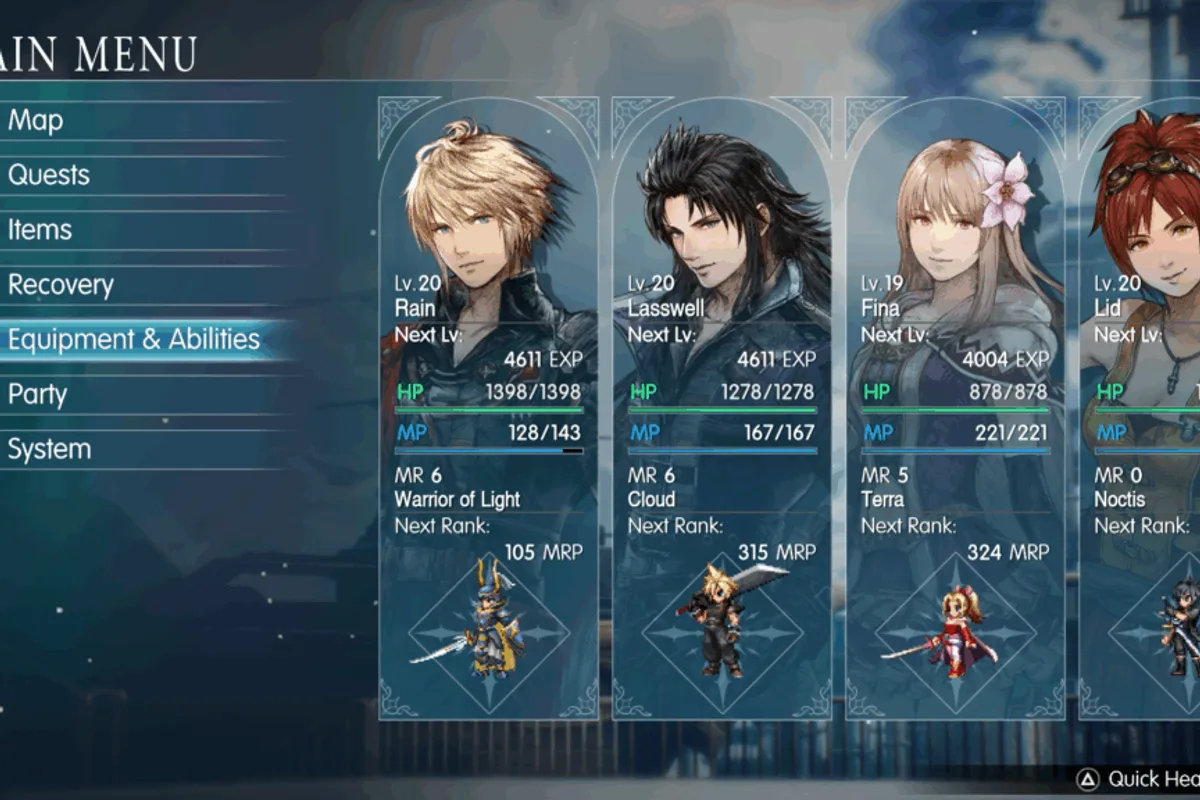
There are 26 Visions to discover throughout the adventure. Each provides combat abilities and permanent statistical improvements, while familiarity grows through continued use. The system allows players to develop specialists, more versatile characters or unusual hybrids.
Medic Leah can give Lasswell healing tools and the ability to pass his turn to another ally. Equipping Cloud instead emphasizes his existing Breaker role. Zidane's Saboteur abilities can complement Lid's more direct damage-oriented fighting style by introducing debuffs and disruption.
These combinations suggest that meaningful progression may come from relationships between abilities rather than simply acquiring stronger equipment. Magicite can be used to increase the base rank of Visions and unlock further options through the Moogle of Light.
The challenge is maintaining useful distinctions between builds. If certain combinations are dramatically more effective than everything else, a flexible system can eventually become restrictive in practice. Its balance across the full campaign will matter considerably.
Stagger, Resonances and traditional summons
Battles use turn-based commands and reward players for exploiting enemy weaknesses. Once the opponents' stagger gauges are depleted, equipped Visions can unleash powerful cinematic finishing moves.
Cloud's Ascension Resonance is one example. These attacks add another layer to planning: creating an advantageous combat phase becomes an objective in itself, rather than merely selecting the highest-damage ability on every turn.
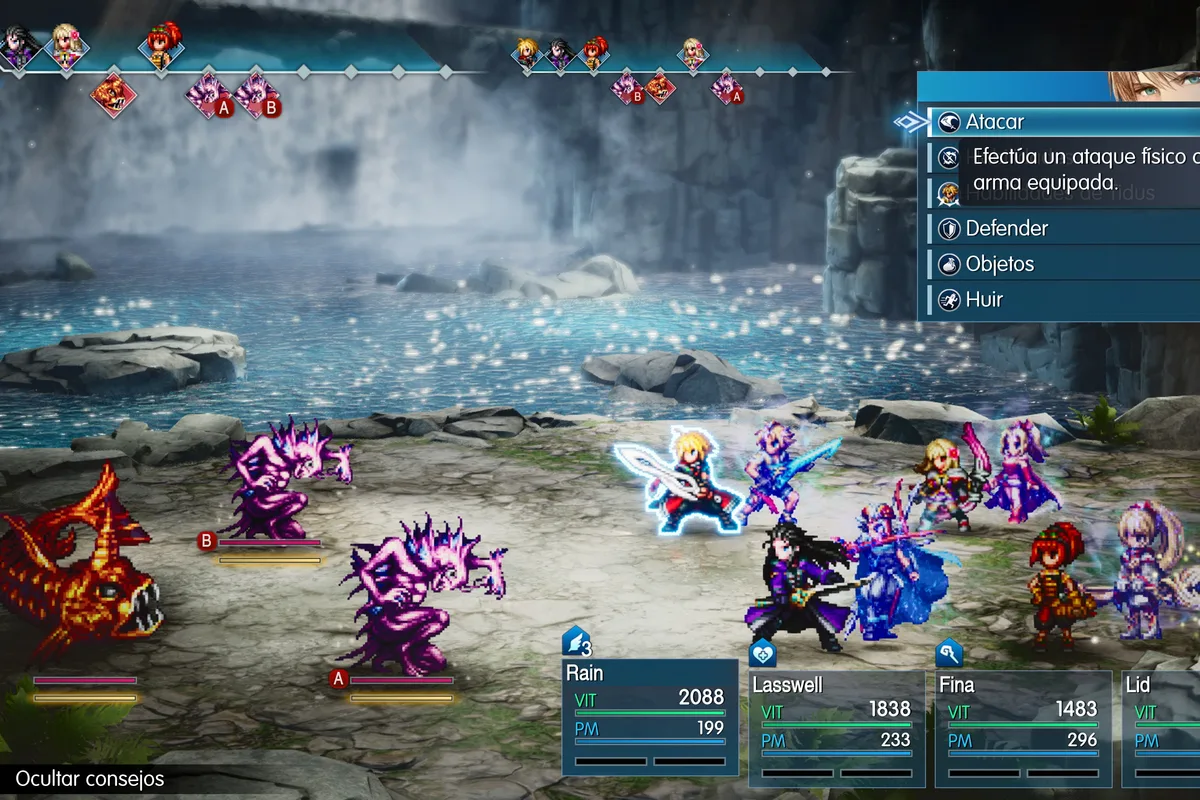
Traditional Espers are separate from Visions. They can participate in battle for three turns before delivering a finishing attack. The distinction gives the game both a longer-term character-building system and temporary tactical assistance.
A rebuilt Brave Exvius adventure
Final Fantasy Resonance draws on the first story arc of Final Fantasy Brave Exvius. Square Enix describes it as an extensive reconstruction rather than a straightforward mobile port.
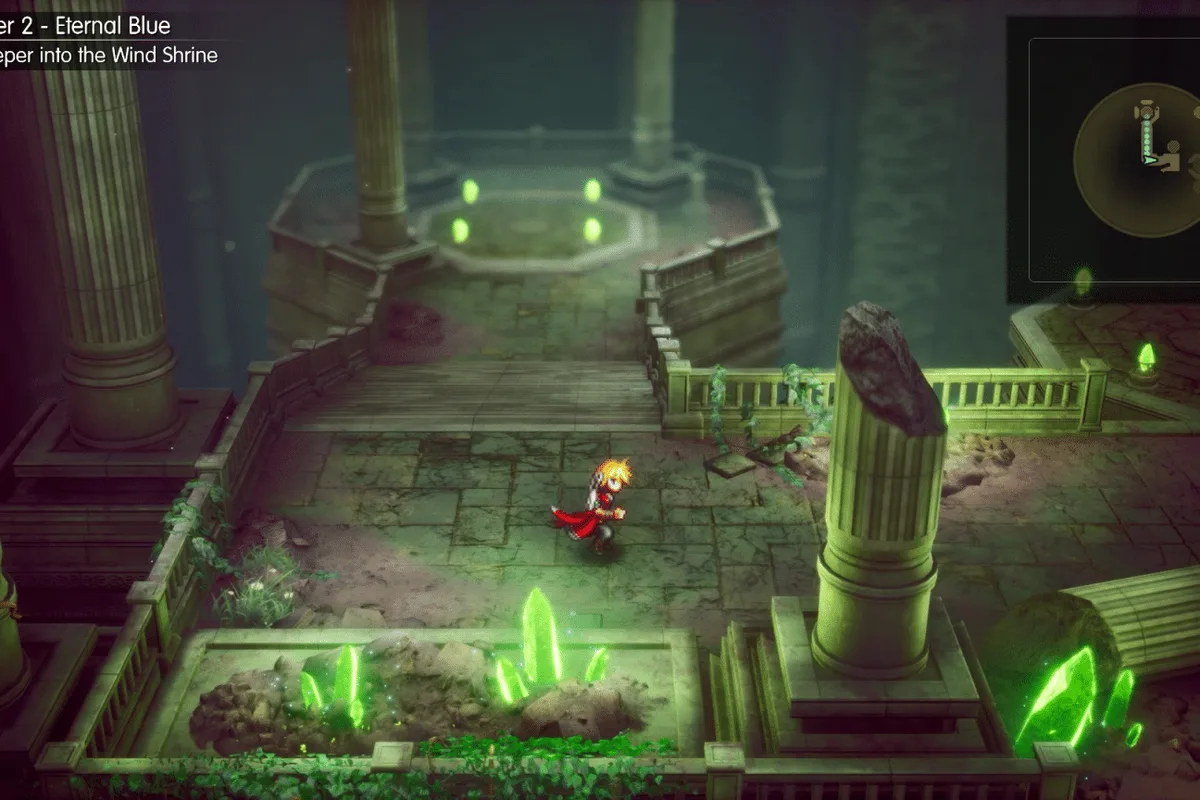
Rain and Lasswell travel across Lapis in a story centered on magical Crystals. Towns, dungeons, airships and chocobos help establish a traditional Final Fantasy structure, while HD-2D graphics bring new depth and lighting to the pixel-based presentation.
Discovering Visions also involves encounters with the franchise's history. Crystal shrines introduce returning heroes through brief stories, including appearances by Terra, Lightning and the original Warrior of Light.
The nostalgia may be immediate, but the systems must remain understandable to players who have not spent years following the series. A mechanically useful Vision should be rewarding even when its original game is unfamiliar.
Try the first chapter before release
A free demo covers the opening chapter and allows save data to transfer into the full game. Square Enix estimates approximately three to five hours of content for this preview.
The announced launch covers Nintendo Switch, Switch 2, PlayStation 5, Xbox Series X|S and PC. Square Enix's Japanese schedule specifies October 23 for Steam, one day after the broader October 22 date.
The demo provides an opportunity to evaluate the early combat systems, although the long-term quality of Visions will depend on how the full adventure distributes its abilities, challenges and opportunities for experimentation.