
News News Official
Nintendo Switch 2 jailbreak advances as hackers extract game files, but full piracy remains unproven
Nintendo Switch 2 security has reached a significant turning point. Since October 22, 2026, the ns2jb exploit has allowed researchers to execute unauthorized code and access certain system functions. Further experiments, covered by Kotaku on October 26, now involve the extraction and analysis of game files. However, this technical breakthrough is not equivalent to fully unlocking the console: no publicly verified method for freely installing and launching copied Switch 2 games has been demonstrated.
 By Maëlle
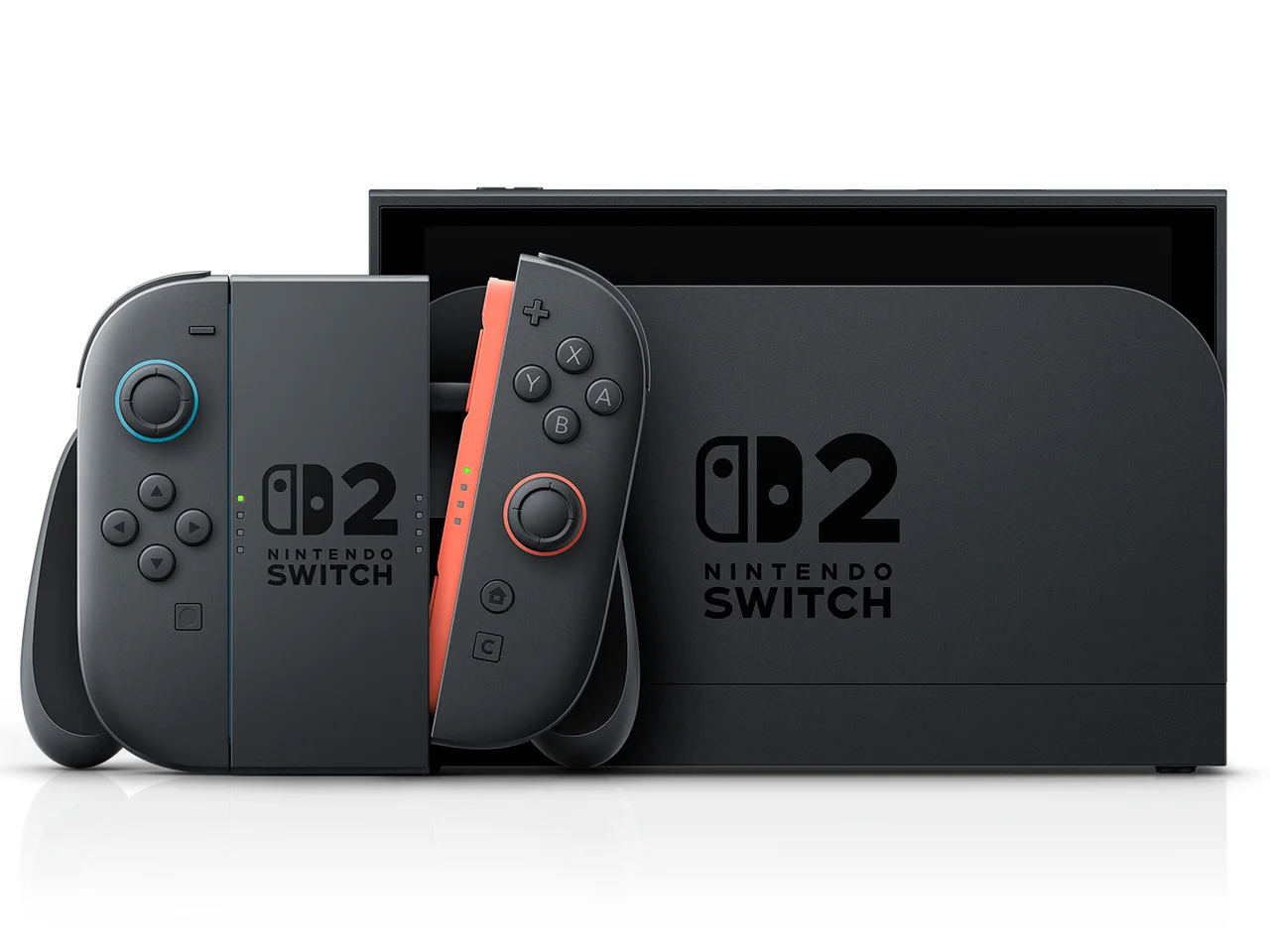
Unexpected characters appearing in Mario Kart World, a programming application disappearing from the eShop and researchers examining internal system files: the Nintendo Switch 2 hacking scene has changed considerably in just a few days.
The developments began on October 22, when security researcher Sammy Hajhamid, known online as pepsipu, publicly demonstrated an exploit called ns2jb.
The software-based method represents a significant advance in understanding the protections surrounding Nintendo's current console.
Four days later, several publications are reporting new experiments involving system files and game resources.
The situation is moving quickly, but the capabilities actually demonstrated remain more limited than headlines describing a completely hacked console might suggest.
A significant new vulnerability in the Switch 2
Ns2jb relies on software vulnerabilities. It does not require opening the console or installing a hardware modification chip.
The researcher uses SmileBASIC 4, a programming environment originally released for the first Nintendo Switch. Backward compatibility allows the application to run on Switch 2.
A vulnerability involving the handling of certain operations makes it possible to bypass restrictions normally imposed on the program.
The exploit then uses a flaw in the system component responsible for filesystem operations to obtain additional privileges.
Hajhamid has documented the discovery and its general technical principles in a public research write-up.
The exploit was demonstrated on Switch 2 firmware version 23.0.1.
This matters because the achievement goes beyond running a small program inside a restricted environment.
It provides access to selected system capabilities that are normally protected, although it does not grant complete control of the console.
Mario Kart World modifications demonstrate the exploit
To demonstrate the exploit's capabilities, the researcher chose a highly visible example: modifying characters in Mario Kart World.
Published footage shows character models from other popular properties, including Hatsune Miku and Peter Griffin, appearing in the game.
This confirms that the access obtained can support certain modifications to existing software.
It does not mean Nintendo has officially introduced those characters or that they can be used normally in online matches.
These modifications are examples of modding, a practice involving changes to content within an existing game.
Modding and commercial piracy are different concepts.
Replacing graphical models does not prove that a console can install and execute unauthorized copies of games.
That distinction has become central to understanding the implications of ns2jb.
Researchers begin extracting game files
Activity accelerated over the October 24 weekend.
Several members of the Switch 2 research community reported new capabilities involving file extraction and analysis.
Resources reportedly associated with Deltarune and a development version of The Duskbloods were among the materials discussed.
On October 26, Kotaku reported that expanded filesystem access was opening the door to extracting software components and examining how the console operates.
However, an important distinction remains.
Recovering models, assets or individual files does not necessarily mean obtaining a complete, functional copy of a game.
TweakTown reported on the same day that no complete Switch 2 game dump had been independently verified.
GBAtemp, whose staff follows the console research community closely, also identified several disputed or insufficiently demonstrated claims involving full game extraction.
There is meaningful progress in accessing data, but no solid public demonstration of a system capable of duplicating and freely running commercial games.
Why this is not a complete jailbreak
The term jailbreak is often used as if it described a single, clearly defined capability.
In reality, different exploits can provide very different levels of access.
With ns2jb, researchers can execute unauthorized code with certain privileges associated with the filesystem service.
That access supports investigation of internal structures, backups of selected data and experiments involving unofficial software.
However, the documented research does not demonstrate complete control of the system kernel.
It also does not establish the availability of fully featured custom firmware capable of permanently replacing the console's official software environment.
Finally, no publicly verified installer for copied commercial games has been demonstrated.
A console with some bypassed protections is not automatically capable of running any illegally downloaded game.
The exploit is temporary and still requires external equipment
Another important limitation is that ns2jb does not persist after a reboot.
Researchers describe it as a non-persistent or tethered jailbreak.
Its effects disappear when the console restarts, requiring the process to be activated again.
The documented demonstration also requires assistance from a computer.
This is therefore not a permanent modification that automatically becomes active whenever the console starts.
Researchers are exploring possible alternative entry points and ways of improving persistence.
Those ideas remain ongoing research rather than confirmed, publicly available capabilities.
For now, the complexity considerably limits the method's practical usefulness for ordinary consumers.
What role did artificial intelligence actually play?
The discovery also attracted attention because of its connection to artificial intelligence.
Sammy Hajhamid explains that he used OpenAI Codex during parts of the research.
Automated tools helped explore vulnerabilities and refine memory conditions needed for the exploit to work reliably.
The researcher developed a testing setup that could repeatedly interact with physical consoles and observe the results.
He says the work took approximately two weeks.
It would therefore be misleading to suggest that an AI independently hacked the Switch 2 without meaningful human involvement.
The AI acted as an assistant within a broader process involving experimental design, testing, technical analysis and interpretation.
The most interesting aspect of this approach is the automation of repetitive experiments that can otherwise consume substantial time during vulnerability research.
Nintendo removes SmileBASIC 4 from the eShop
The discovery was followed by a visible change in Nintendo's digital storefronts.
SmileBASIC 4, the programming application used as the entry point for the initial exploit, disappeared from multiple regional eShop listings.
Nintendo Life, Ars Technica and GBAtemp documented the removal.
Restricting access to the vulnerable application would be consistent with an attempt to limit the exploit's reach, but Nintendo has not issued a detailed public explanation for the delisting.
The observed removal and its presumed motivation must therefore be kept separate.
Removing an application from a storefront also does not automatically repair vulnerabilities within the console's operating system.
Researchers are already discussing the possibility of reaching some of the same system functions through other software.
As of October 26, the sources examined did not confirm a system update officially announced as a fix for ns2jb.
Homebrew, emulation and game piracy are separate issues
The potential implications of the exploit extend beyond commercial piracy.
Homebrew refers to software developed to run on a system outside the manufacturer's normal approval and distribution process.
It may include small amateur games, technical tools or programs designed to explore hardware capabilities.
Homebrew launcher demonstrations appeared shortly after ns2jb was announced.
However, the existence of a launcher does not establish a complete, stable unofficial software environment.
Emulation is another separate field. Running software written for a console on another device requires reproducing enough of that system's behavior.
Access to Switch 2 files may help researchers working on emulation, but it does not mean a PC emulator can already run the console's commercial games.
Executing unauthorized copies would require overcoming additional technical restrictions.
These areas of research are developing at different speeds and should not be treated as interchangeable.
The original Switch faced a different situation
Comparisons with the first Nintendo Switch are frequent.
In 2018, an important vulnerability affecting certain early Switch systems enabled particularly deep access to the hardware.
Because that vulnerability was rooted in hardware, correcting it on affected consoles was considerably more difficult.
The current Switch 2 situation is different.
Ns2jb exploits software weaknesses and does not demonstrate the same level of control over system boot processes and the kernel.
The documented vulnerabilities may therefore be addressable through software updates.
However, it is impossible to establish whether researchers will discover more powerful exploits or whether Nintendo will successfully close every related attack path.
The history of the original Switch provides context, not a reliable timetable for what might happen to its successor.
What are the risks for Switch 2 owners?
Using software that exploits system vulnerabilities can introduce risks to both devices and data.
Errors during modifications may cause malfunctions or loss of access to certain content.
Users must also consider Nintendo's service terms, which place restrictions on unauthorized modifications.
However, there is no basis for claiming that every experiment involving ns2jb automatically results in a console ban or permanent hardware failure.
The verified reporting does not establish such an outcome.
The project remains experimental, and the demonstrations are primarily intended for people who understand the technical consequences of modifying a console's software.
For ordinary consumers, the exploit does not provide any functionality officially supported by Nintendo.
A major research breakthrough, not a fully unlocked Switch 2
The events of October 22 through 26 mark a significant step in research into Nintendo Switch 2 security.
Sammy Hajhamid demonstrated a non-persistent software exploit and modifications to Mario Kart World. Other researchers subsequently presented homebrew experiments and claims involving extracted files.
These developments show that some technical barriers have genuinely been crossed.
However, major restrictions remain: no demonstrated complete kernel compromise, no permanent custom firmware and no publicly verified method for installing and launching copied Switch 2 commercial games.
The removal of SmileBASIC 4 from the eShop is a visible change in software distribution, but no specific system patch was officially confirmed in the sources examined.
The real story is therefore not that every Nintendo game can now be pirated.
It is that researchers have gained access to previously protected functions, opening a new phase of examination of the console's security architecture.
Nintendo now faces the task of responding to those vulnerabilities, while researchers continue exploring how far the access can actually extend.