
News News Official
Overwatch Is Bringing Back Competitive 6v6 Role Queue, but Blizzard Isn't Abandoning 5v5
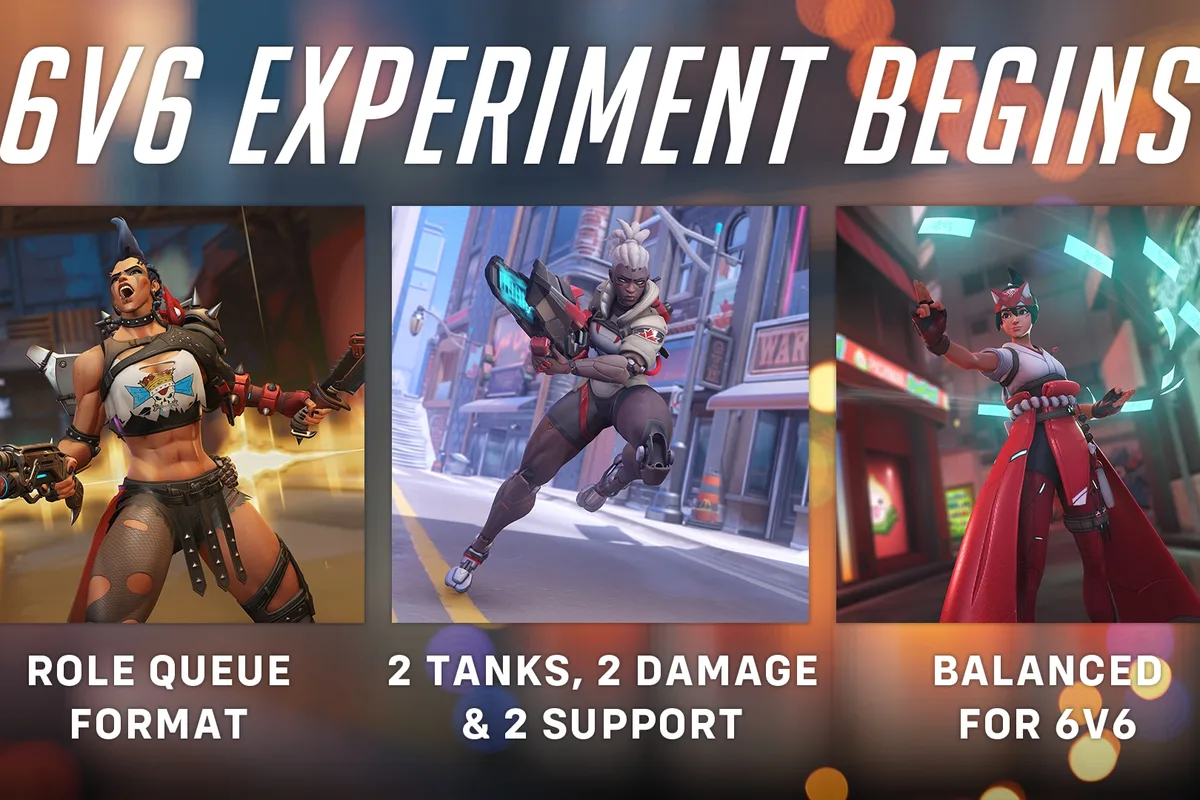
Overwatch game director Aaron Keller has confirmed that 6v6 Role Queue is returning to Competitive play in Season 6. The four-week experiment will feature a dedicated balance patch and run alongside the existing 5v5 and 6v6 Open Queue modes, as Blizzard moves toward supporting both team sizes.
 By Nolind Overwatch
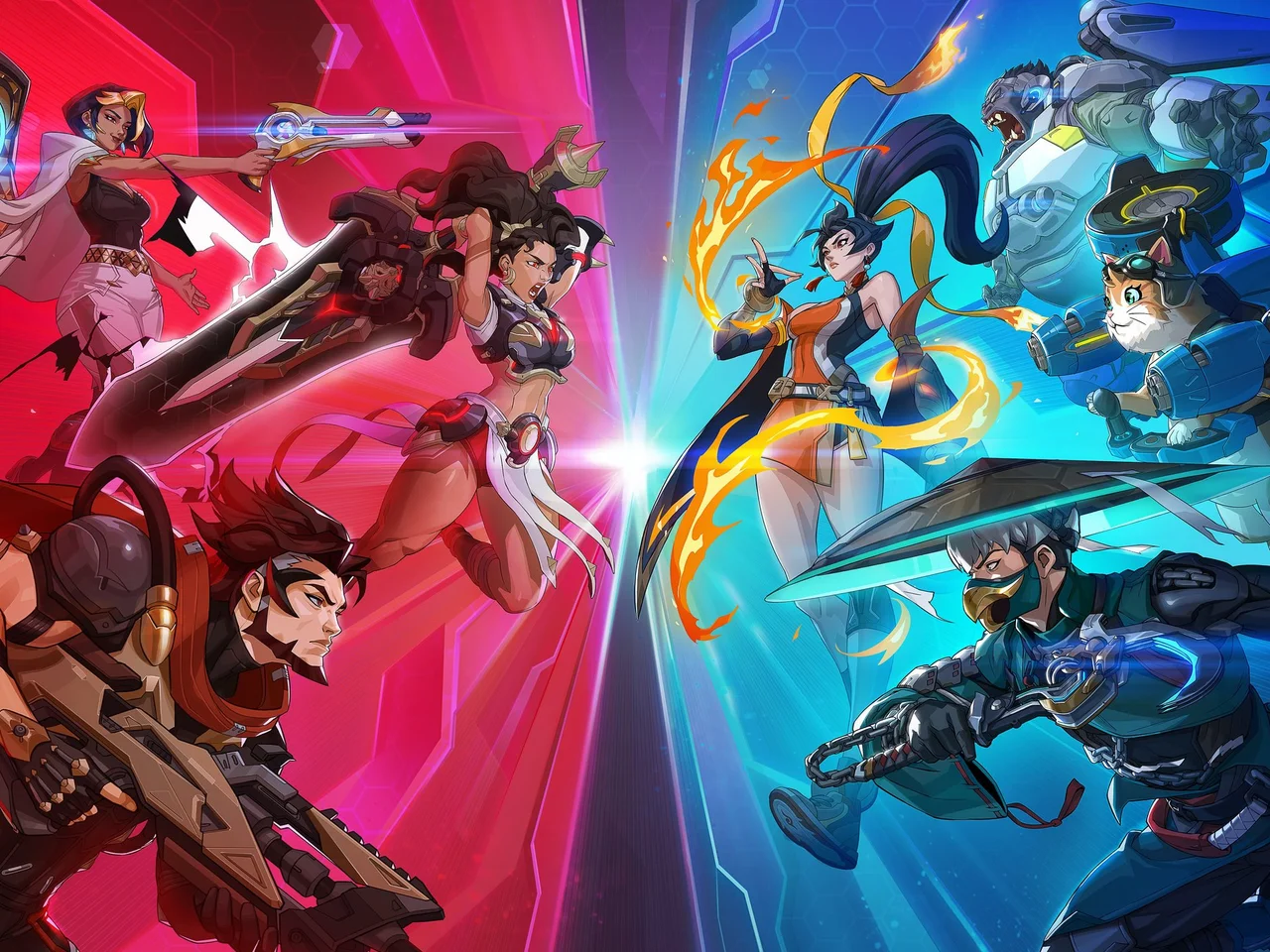
Overwatch's long-running debate over team size is no longer heading toward a single winner. Blizzard has decided to maintain both 5v5 and 6v6, with a new Competitive Role Queue experiment bringing the classic 2-2-2 team composition back during Season 6.
Game director Aaron Keller announced the plan on November 10, 2026, in a Director's Take devoted to the future of the game's competitive formats. The returning mode will begin on the first day of Season 6 and run for four weeks.
This is not a rollback of Overwatch's main competitive structure. Standard 5v5 remains the primary mode, while the existing 6v6 Open Queue continues. The new Role Queue test adds a third Competitive option rather than replacing either one.
Why the traditional 2-2-2 composition matters
Six-player Role Queue assigns two Tanks, two Damage heroes and two Supports to each team. That structure was central to the original Overwatch experience and remains one of the most requested alternatives to the modern 5v5 system.
The most obvious difference is the presence of a second Tank. In 5v5, one player often carries much of the responsibility for creating space, surviving pressure and controlling the frontline.
A second Tank makes it possible to divide those responsibilities. One character can establish a defensive position while another initiates an engagement or protects vulnerable teammates.
But larger teams also affect combat complexity. Supports have an additional ally to protect, while Damage heroes may need to fight through more defensive abilities before securing an elimination.
The number of overlapping abilities increases as well. Depending on the composition, fights may become more focused on coordinated engagements and defensive combinations than in the standard 5v5 format.
Simply transferring the existing balance values into a larger team environment would not necessarily produce equivalent results.
Blizzard is developing dedicated 6v6 balance changes
Keller confirmed that Season 6 will include a balance patch specifically designed for six-player teams. The changes will apply to both the new Role Queue test and the existing 6v6 Open Queue.
Historically, Overwatch's 6v6 variant inherited many adjustments made for the game's primary mode. While that approach often worked, it also created differences in how individual heroes performed.
Keller provided two examples. D.Mon currently performs better in 6v6, while Domina is comparatively less effective in the larger format.
Those differences are not necessarily surprising. A hero's value depends partly on the number of allies available, the defensive tools present in a team and the opportunities for ability combinations.
A character designed to hold a frontline alone may become more effective alongside another Tank. Other heroes may lose relative value when opponents have more defensive resources available.
Blizzard has not published the full numerical changes associated with the upcoming balance patch. The current performance hierarchy therefore should not be treated as a reliable prediction of the Season 6 meta.
The player surveys did not produce a clear winner
One of the most revealing details from Keller's update concerns Blizzard's own research into player preferences.
Following earlier 6v6 experiments, the studio conducted several surveys. The results showed remarkably similar levels of support for 5v5 and 6v6, with strongly committed groups on both sides.
Blizzard reports that 32 percent of respondents in each camp expressed the strongest preference for their chosen format. That figure describes the distribution of survey responses, not a verified percentage of the entire Overwatch player population.
Player behavior tells a related story. According to Keller, 6v6 Open Queue has steadily increased in popularity and became the second most-played mode during Season 5, with Mystery Madness close behind.
That level of engagement gives Blizzard a reason to invest in 6v6 as an ongoing experience rather than treating it exclusively as a temporary nostalgic event.
The studio also experimented with two alternative queue formats earlier in 2026. Keller acknowledged that neither fully delivered the experience requested by players who specifically wanted traditional 6v6 Role Queue.
The new four-week experiment is a more direct attempt to answer that demand.
Three Competitive queues create a matchmaking challenge
The biggest operational risk is not necessarily balance. It is the possibility of dividing the player population across too many matchmaking queues.
When Season 6 launches, players will have three Competitive options.
- Standard 5v5 Role Queue, which remains the primary Competitive format. - 6v6 Open Queue, allowing more flexible team compositions. - 6v6 Role Queue, a four-week ranked experiment requiring two Tanks, two Damage heroes and two Supports.
Every additional queue can affect how quickly players find a match, particularly when matchmaking also needs to consider skill ratings, party sizes, regions and other restrictions.
Blizzard acknowledges that adding 6v6 Role Queue may increase waiting times in the new mode and potentially affect existing modes as well.
Season 6 will introduce matchmaking changes intended to make those delays more manageable. Keller describes the expected improvement as a working hypothesis rather than a guaranteed result.
The development team plans to monitor queue health throughout the experiment.
Running both versions of 6v6 simultaneously will also provide useful behavioral data. Blizzard wants to understand whether Open Queue players are primarily attracted by six-player teams or by the freedom to select heroes without fixed role assignments.
5v5 remains the main game
Keller was explicit about Blizzard's current position: the studio does not intend to replace Overwatch's primary 5v5 format with 6v6.
At the same time, the team increasingly regards 6v6 as an important alternative deserving its own development attention.
That includes dedicated balance work, experiments with different queue systems and continued evaluation of player preferences.
The four-week Role Queue mini-season does not automatically establish that this specific mode will remain permanently available afterward. Blizzard has not committed to a final long-term arrangement for it.
The wider commitment is clearer. Both team sizes will continue receiving support for the foreseeable future, and Blizzard is no longer approaching their relationship as a contest in which one must entirely eliminate the other.
This is a meaningful change from the philosophy that accompanied Overwatch's original transition to five-player teams, when reducing queue times and addressing gameplay problems were major priorities.
What happens when Season 6 launches
Video Games Chronicle reports that the Competitive 6v6 Role Queue experiment is scheduled to begin on December 8, 2026. Blizzard's own November 10 announcement confirms the first day of Season 6 as the starting point, without independently specifying that calendar date.
The experiment will run for four weeks, with a dedicated balance update applying to both 6v6 modes.
Season 6 will also introduce a new hero. Keller says the character's full reveal will take place during the Overwatch Champions Series Finals broadcast, although the Director's Take does not disclose the hero's identity.
Another limited-time mode, Mystery Madness, is scheduled to return in Season 1 of 2027 with a new theme and additional powers.
For the 6v6 experiment, the most important results will concern player participation, matchmaking delays and the effectiveness of the revised balance systems.
A successful return requires more than nostalgia for the original format. Blizzard must demonstrate that six-player Role Queue can function alongside the established modes without making matchmaking significantly worse for the wider community.
The first four weeks of Season 6 will provide the initial evidence for that decision.