
News News Official
Pokémon Winds and Waves: Game Freak programmer researches more efficient water simulation, but game integration is unconfirmed
Could the oceans of Pokémon Winds and Pokémon Waves benefit from new graphics research? That question has emerged after a scientific paper co-authored by a Game Freak programmer attracted gaming media attention. Presented at Pacific Graphics 2026, the research proposes a way to reduce the computational cost of certain liquid simulations while maintaining comparable visual quality. It is an interesting development ahead of the Pokémon games' planned 2027 launch on Nintendo Switch 2, but one distinction is essential: Game Freak has not confirmed that the technology is being used in either game.
 By Maëlle
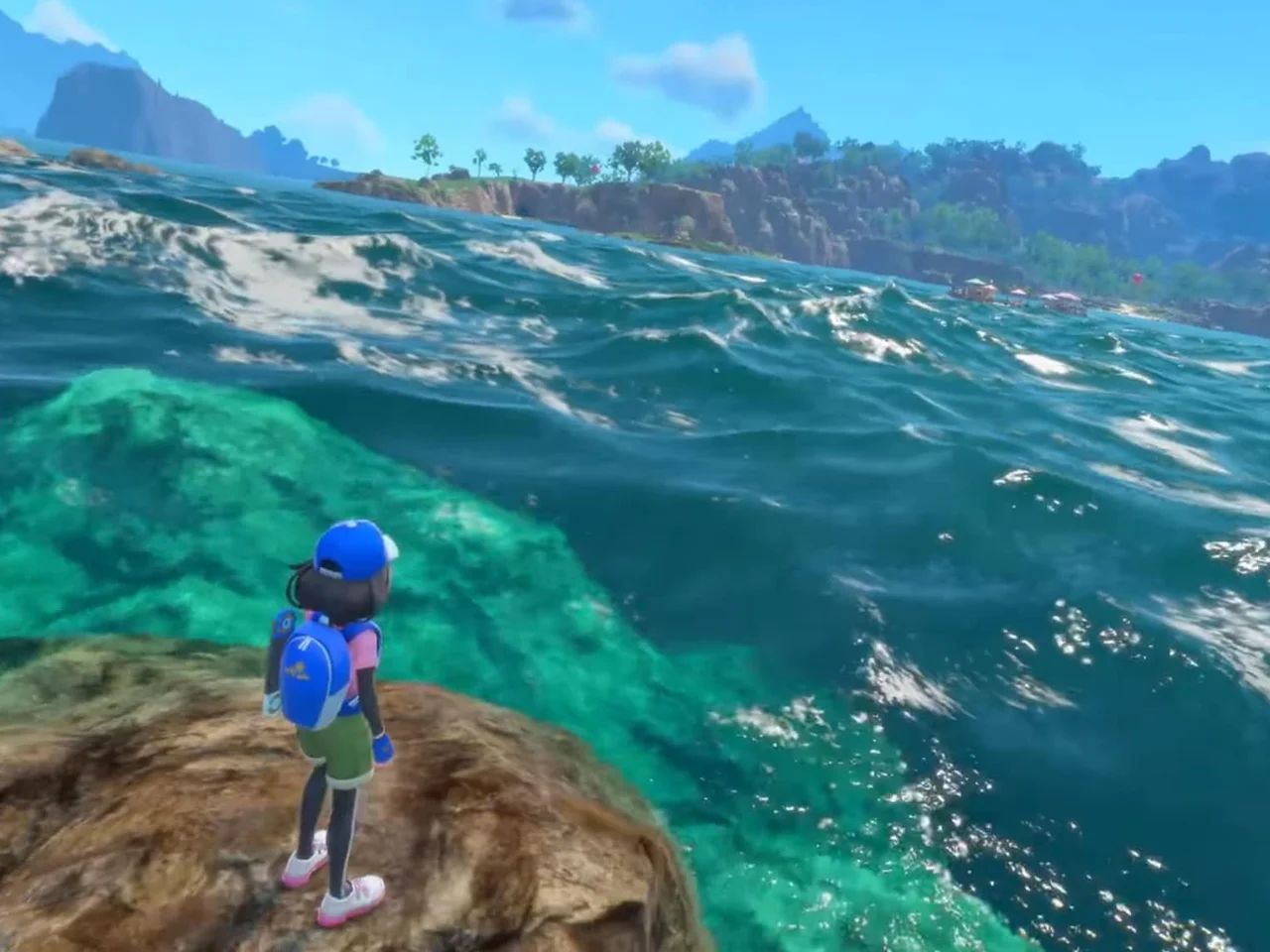
Turquoise seas, waves breaking against rocky shores and tropical islands stretching toward the horizon. Water plays an important visual role in the first trailer for Pokémon Winds and Pokémon Waves, making a recently discussed scientific paper particularly intriguing.
Fumiya Narita, a programmer at Game Freak, and Takashi Kanai, a professor at the University of Tokyo, presented research on liquid simulation at Pacific Graphics 2026 in Singapore on October 6.
Japanese outlet AUTOMATON examined the paper on October 22, while GamesRadar+ covered the possible connection to Pokémon on October 24.
That connection raises a natural question: could research conducted by someone employed at Game Freak benefit the studio's next Pokémon games?
For now, the answer is that such an application is theoretically possible, but it has not been announced.
A genuine research paper, not a Pokémon leak
The study is titled Beyond Horizontal Refinement: Extending Quadtree Tall Cells with Adaptive Optical Layers.
It appears in Computer Graphics Forum, volume 45, issue 7, as part of the Pacific Graphics 2026 proceedings.
Its authors, Fumiya Narita and Takashi Kanai, have previously worked on related liquid simulation methods.
This is not an anonymous document attributed to Game Freak or a rumored internal presentation about an upcoming Pokémon feature.
It is an academic publication describing a computational approach and comparing experimental results with existing methods.
Confusion begins when the existence of that paper is treated as confirmation of a game feature.
Working at Game Freak establishes Narita's professional affiliation. It does not mean that every research project involving him is automatically integrated into the studio's games.
Why realistic water simulation is computationally expensive
Displaying an animated blue surface is only one part of representing water in a game.
Physical liquid simulations also attempt to determine how water moves, interacts with obstacles and responds to forces.
Some techniques divide the simulated space into a collection of small cells. Equations describing fluid motion are then solved using that structure.
As the grid becomes more detailed, the computations can become increasingly expensive. This is particularly challenging when large volumes of water contain many small disturbances.
Researchers therefore investigate ways to concentrate detailed calculations where they make the greatest visible difference.
That is the central idea behind the new paper.
Rather than treating the entire body of water with uniform precision, the method adapts characteristics of the grid to the local complexity of the liquid's movement.
Extended Quadtree Tall Cells focuses computation near the surface
The proposed technique is called Extended Quadtree Tall Cells.
It combines two ideas developed through earlier research.
The first adjusts the horizontal resolution of the simulation grid where needed. The second changes the thickness of a finely calculated region near the liquid surface.
Traditional Tall Cell structures allow deeper regions to be represented with elongated cells, while areas close to the surface retain more detail.
Quadtree Tall Cells introduced adaptive horizontal refinement. However, that approach becomes less efficient when large areas of the surface contain numerous small details.
The new method attempts to address that limitation by controlling both horizontal resolution and the thickness of the detailed surface layers.
Its primary goal is not to make water universally more spectacular. It is to achieve comparable visual results with less computation in situations where the method proves effective.
Promising results, but not universal performance gains
The authors evaluated their technique against previous methods using several experimental scenes.
Their reported results show reduced computational costs in some cases involving complex liquid surface motion.
The benefits vary depending on the situation. A scene filled with small surface disturbances creates different computational demands from a container gradually filling with water.
The technique also involves trade-offs.
AUTOMATON notes that some structures used in the implementation can increase memory requirements.
The researchers identify further work involving the construction of simulation layers and more complex interactions between liquid and solid objects.
It would therefore be inaccurate to turn these findings into a promise of automatically higher frame rates in every video game.
The measurements concern particular scientific experiments, not benchmarks performed on Pokémon Winds or Pokémon Waves.
Why Pokémon Winds and Waves entered the discussion
The potential connection is understandable.
Pokémon Winds and Pokémon Waves were officially announced on February 27, 2026, with worldwide releases planned for 2027 exclusively on Nintendo Switch 2.
Their debut trailer introduces a new open-world environment consisting of tropical islands and a vast ocean.
The footage includes beaches, cliffs, moving waves and several familiar aquatic Pokémon.
The Pokémon Company describes a region populated by creatures that have developed distinct ecosystems within their natural environments.
In that context, research capable of improving water simulation efficiency is naturally relevant.
However, relevance is not proof of technical integration.
No official statement connects the Extended Quadtree Tall Cells algorithm to the technology powering either Pokémon game.
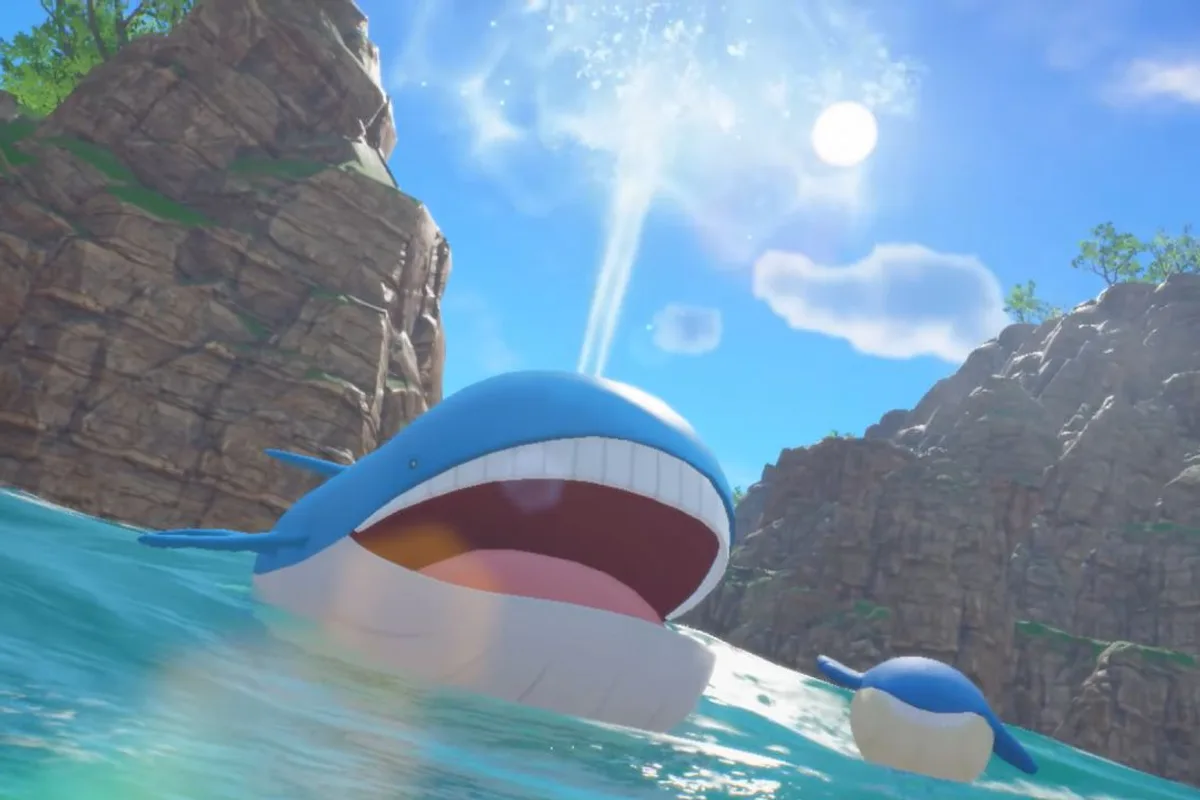
Beautiful oceans do not necessarily require full physical simulation
Another important distinction concerns how water can be rendered in games.
Convincing oceans can be created using techniques that do not physically simulate every part of the liquid.
Predefined animations, materials, surface effects and specialized rendering calculations can create the impression of moving water.
A visually impressive wave therefore does not reveal which algorithm is responsible for its appearance.
Similarly, an efficient research method cannot automatically be considered suitable for a particular console without understanding its integration costs, memory requirements and the game's rendering architecture.
The Pokémon trailer establishes an ambitious aquatic visual setting. It does not confirm the physical simulation model or its computational cost.
Nintendo Switch 2 makes performance efficiency especially relevant
The next Pokémon games are planned exclusively for Nintendo Switch 2, making efficient resource management an obvious subject of interest.
Like every console, the system operates within a finite hardware budget.
Developers must distribute available resources between world simulation, graphics, artificial intelligence, animation and other gameplay systems.
A method that reduces certain computations could theoretically free resources for other tasks.
However, that general possibility does not establish that Winds and Waves will deliver better frame rates because of Narita and Kanai's research.
Game Freak has not published performance targets or benchmarks connecting the paper to these games.
The scientific results must therefore not be presented as performance measurements obtained on Nintendo Switch 2.
What is officially confirmed about the upcoming games?
Several important details about Pokémon Winds and Pokémon Waves have been established independently of the research speculation.
They are new mainline Pokémon RPGs developed by Game Freak.
Their worldwide release is planned for 2027 on Nintendo Switch 2, although no exact date has been announced.
Players will explore an open world featuring islands, coastal environments and an expansive ocean.
The three starter Pokémon have already been introduced: Browt, a Grass-type; Pombon, a Fire-type; and Gecqua, a Water-type.
Two special Pikachu also appear in the promotional materials, and the playable character's outfit differs between the two versions.
These are official announcements. Unlike the possible use of the new simulation technique, they do not rely on inference.
What the research does not confirm
The paper does not confirm unrestricted underwater exploration in Pokémon Winds and Waves.
It also does not establish that ocean waves will physically react to Pokémon movement, battles or changing weather conditions.
Nor does it provide the games' final resolution, frame rate or rendering architecture.
Those details may be discussed in future announcements, but they remain unknown.
Even Narita's direct participation in the development of these two particular games cannot be established solely from his employment at Game Freak.
A company can support or participate in academic research without applying every resulting technique to its products immediately.
Research worth following without inventing a game feature
Fumiya Narita and Takashi Kanai's publication is a documented contribution to liquid simulation research.
Its main value lies in demonstrating ways to reduce the computational cost of certain simulations while preserving comparable visual quality.
The connection to Pokémon Winds and Pokémon Waves remains indirect: Game Freak employs one of the researchers, and the studio's next games prominently feature aquatic environments.
That is enough to raise an interesting question, but not enough to announce a new technology inside the next Pokémon generation.
Both games remain scheduled for 2027 on Nintendo Switch 2.
Until official technical details emerge, their oceans should be understood as promotional previews of games still in development, not demonstrations of a specifically identified scientific technique.