
News News Official
Capcom forces a Street Fighter 6 hitbox resource offline, leaving competitive players without a valuable tool
In Street Fighter 6, a few pixels can decide an entire match. Understanding those pixels has just become more difficult. On October 23, 2026, community website Ultimate Frame Data announced that it had removed its Street Fighter 6 hitbox and collision data following a request from Capcom. The Japanese publisher raised concerns about information that is not normally visible during gameplay and may have been collected using unauthorized analysis methods. For players who relied on the site to understand attack ranges and character interactions, its disappearance removes a useful way to study the game.
 By Maëlle
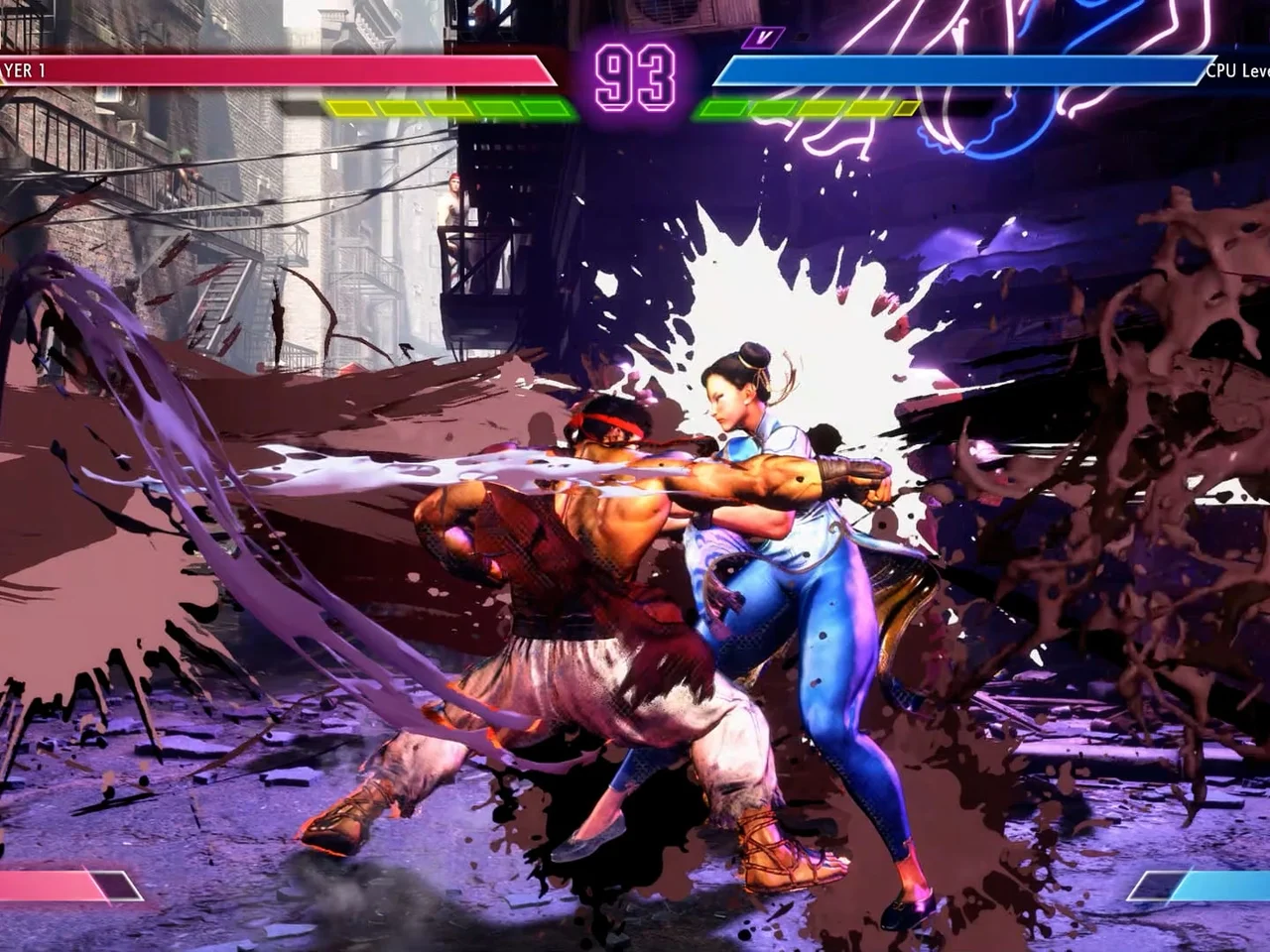
A kick that looks as though it should connect but misses. An attack that seems punishable yet remains safe at a particular distance. A character slipping beneath a projectile because of a small change in posture.
Fighting games are built around extremely precise rules, many of which are invisible during normal matches.
Resources such as Ultimate Frame Data exist to help players understand those systems.
The website previously allowed Street Fighter 6 players to examine attack hitboxes, collision volumes and other technical information.
That section is no longer available.
On October 23, site administrator MetalMusicMan announced that he had received a removal request from Capcom's intellectual property department.
Rather than waiting until the deadline set by the publisher, he removed the material.
The Street Fighter 6 page now displays Capcom's letter.
Other parts of Ultimate Frame Data, including its Super Smash Bros. Ultimate content, remain accessible.
What Capcom objected to
The published letter focuses on a specific type of information.
Capcom says the Street Fighter 6 page contained hitbox and collision data that players cannot ordinarily see or access during standard gameplay.
The company identifies itself as the owner of intellectual property rights associated with the Street Fighter series and its characters.
It also states that it does not authorize modified software, analysis tools or other unauthorized methods to obtain or use game data.
Importantly, Capcom expresses concern that the published information may have been collected through such methods.
The public letter does not provide a complete technical analysis establishing exactly how Ultimate Frame Data obtained the material.
Capcom asks the site's administrator to review the information and consider removing or disabling access by October 30, 2026.
That date was the requested deadline, rather than an automatic removal imposed through a court judgment.
The administrator chose to comply on October 23.
Why hitboxes matter in fighting games
Understanding the reaction requires looking beyond what players see on screen.
When a character performs an attack, the visible animation is not the only factor determining whether it connects.
The game uses invisible geometric volumes to calculate different interactions.
An offensive hitbox is, broadly speaking, the region in which an attack can connect with an opponent.
A hurtbox represents the region in which a character can be hit.
Other volumes can affect physical collision and particular interactions within the combat system.
These shapes do not necessarily match the exact outline of a character's visible limbs or clothing.
A punch may appear to reach an opponent even though its active hitbox does not extend far enough.
Conversely, certain attacks can reach farther than their animations initially suggest.
These differences explain many situations that players investigate in training mode.
Visualizing the underlying regions can turn uncertainty into concrete technical information.
Frame data and hitboxes are not the same thing
The two concepts are closely connected, but they describe different properties.
Frame data primarily describes an attack's timing.
It can show how long a move takes to begin, how long it remains active and how much time a character needs to recover afterward.
Players commonly refer to startup, active and recovery frames.
These values help determine whether a blocked attack can be punished or whether a combination of moves is possible.
Hitbox information adds a spatial dimension.
It explains where active and vulnerable regions are positioned during different stages of an animation.
Knowing an attack's frame count does not always explain why it connects at a particular distance.
Likewise, knowing its collision shape does not reveal every timing advantage or disadvantage.
For players studying matchups seriously, the two categories complement each other.
A valuable resource for competitive preparation
Tournament players do more than memorize combos.
They study the spacing at which their attacks become effective, which moves counter their opponents' options and when they can regain control of an exchange.
Visual hitbox data can make this process easier.
It may reveal why an anti-air works against certain jumps but fails against others.
It can also explain how an attack passes over a character whose vulnerable area changes during a movement.
This information helps players prepare precise responses to common strategies.
Without a visualizer, players can still experiment using the game's training tools.
However, some interactions require more repetition, and their underlying causes can be difficult to isolate.
Removing the resource does not eliminate the possibility of learning those mechanics.
It makes a particular category of technical information less accessible.
MetalMusicMan removed the content before the deadline
Ultimate Frame Data did not wait until October 30 to comply.
On October 23, its administrator announced on X that he had received the letter from Capcom's legal department.
He made clear that removing the Street Fighter 6 content was not his preferred outcome.
The page that previously hosted the game's technical data now displays the removal notice.
That decision appears to have avoided an immediate public confrontation over continued hosting of the disputed information.
The sources examined do not establish that Capcom has filed a lawsuit against the administrator.
It would therefore be inaccurate to describe the removal as the result of a court order or legal judgment.
The published document is a request from the publisher's intellectual property department.
Making it public does, however, allow readers to examine Capcom's stated concerns directly.
Ultimate Frame Data itself remains online
The site's name has led to some confusion about the scope of the removal.
Ultimate Frame Data was not dedicated exclusively to Street Fighter 6.
It also provides analysis tools for Super Smash Bros. Ultimate.
As of October 24, that section remains accessible.
The published letter specifically identifies Street Fighter 6 and the material hosted on its page.
Nothing in the public document establishes that Capcom requested the deletion of every resource on the website.
Nor does it establish a general ban on videos, screenshots or technical discussions about Street Fighter 6.
The dispute concerns collision-related information and the methods potentially used to collect it.
That distinction does not eliminate the consequences for players, but it prevents the incident from being described as a general prohibition on community guides.
Why modification tools are central to the dispute
Gaming communities sometimes use software modifications or analysis tools to expose information not visible through the standard game interface.
Such programs can make underlying technical data easier to inspect.
In Street Fighter 6, this may include the geometric volumes used to calculate interactions between fighters.
From a player's perspective, that work may be intended purely for study or training.
However, an educational purpose does not automatically resolve questions involving intellectual property or terms of use.
Capcom maintains that certain methods of accessing and using its game data are not authorized.
Its request to Ultimate Frame Data reflects that position.
Several activities must nevertheless be distinguished.
Observing gameplay animations, recording timing measurements, modifying software and publishing information extracted from internal systems are not necessarily equivalent acts.
Their legal treatment depends on the methods involved, applicable agreements and relevant law.
The published letter cannot establish all those distinctions on its own.
Players react to the loss of a familiar resource
Kotaku reports that the announcement has frustrated members of the Street Fighter 6 community.
Many players regarded Ultimate Frame Data as a useful tool for tournament preparation and detailed character analysis.
Their disappointment is partly about losing a freely accessible resource maintained by members of the community.
Some players have contrasted Capcom's request with the continued availability of Super Smash Bros. Ultimate information on the same site.
That comparison does not establish that the publishers involved have identical legal policies.
It illustrates the different ways competitive communities access and distribute game data.
Social media and Reddit discussions also reflect disagreement over whether extracting information for training should be treated differently from other forms of unauthorized modification.
Those reactions demonstrate frustration among some players, not an independent determination that Capcom's request is unlawful.
Street Fighter 6 still has official training features
The controversy does not mean Capcom opposes all technical analysis of its game.
Street Fighter 6 includes an extensive training mode within Fighting Ground.
Players can configure situations, study attacks and practice responses to their opponents.
The game also provides tools for understanding timing and different combat interactions.
Those official features remain available.
However, they do not necessarily reproduce every capability of an external visualizer displaying detailed, otherwise invisible collision volumes.
That difference explains why community tools are valuable.
Player-created applications often address specialized needs not fully covered by official interfaces.
Removing one of those tools raises a broader design question: how much access should developers give players to the internal mechanics of competitive games?
The implications extend beyond Street Fighter 6
Competitive games often rely on an informal partnership between publishers and their communities.
Developers provide the game, while players create guides, simulators, databases and analysis tools.
These community projects can extend the life of a title.
They make difficult mechanics easier to learn and help knowledge spread between players.
However, some resources rely on data that publishers do not expose directly.
When modifications or extraction methods are involved, disputes can arise.
Ultimate Frame Data illustrates that tension.
A publisher may seek to control access to internal game information, while players want increasingly precise tools to understand the rules governing their matches.
Those interests are not necessarily incompatible.
But they require clear boundaries around which information and collection methods publishers accept.
Transparency matters in competitive play
The competitive nature of Street Fighter 6 makes the dispute especially sensitive.
When a player loses an exchange, they may want to understand whether the mistake involved spacing, timing or an unusual property of the opposing move.
Match footage does not always provide an obvious answer.
Technical tools can clarify situations that appear inconsistent when viewed only through animations.
Having access to this information does not guarantee victory.
Execution, reactions, strategy and adaptation still determine match outcomes.
But understanding the rules lets players spend more time improving decisions and less time trying to discover how the system works.
The disappearance of Ultimate Frame Data's Street Fighter 6 content therefore means more than losing another bookmarked website.
It removes a particular way of examining the game's mechanics in detail.
Capcom has not announced an official replacement
The removal request was not accompanied, in the sources examined, by an announcement of an official tool designed to replace the deleted visualizations.
It is therefore not possible to say that players will soon regain access to the same information through a Capcom application.
The publisher could eventually clarify its policies or expand Street Fighter 6's training features.
However, neither development has been confirmed in the public letter.
The immediate situation is simpler: a community website has removed information that Capcom considered problematic.
Whether an acceptable alternative will emerge remains uncertain.
The removal is complete, but the discussion continues
As of October 24, 2026, the key facts are established.
Capcom contacted Ultimate Frame Data about Street Fighter 6 hitbox and collision information.
The publisher requested that the material be reviewed and removed or disabled by October 30.
MetalMusicMan removed the relevant section on October 23 and published the letter.
The website remains available for other games, including Super Smash Bros. Ultimate.
No court judgment or general prohibition on publishing fighting game guides has been established.
However, the loss creates a practical difficulty for players accustomed to studying Street Fighter 6's most detailed interactions.
The game remains available, its training modes still work and its underlying rules have not changed.
What has changed is the public's ability to inspect some of those rules.
For a competitive game in which precision matters so much, that difference is significant.